

How to Store Gourmet Coffee Beans: A 2026 Guide
Table of Contents
- Why Proper Storage Keeps Your Gourmet Beans Fresh
- How Long Do Coffee Beans Stay Fresh?
- Best Coffee Storage Canisters and Containers
- Freezing Coffee Beans Pros and Cons
- Step-by-Step: How to Store Gourmet Coffee Beans for Peak Flavor
- Common Coffee Storage Myths and Troubleshooting Stale Beans
- Frequently Asked Questions
Last Updated: October 2, 2026
Why Proper Storage Keeps Your Gourmet Beans Fresh
Gourmet coffee beans start losing their best qualities the moment they finish roasting. Learning how to store gourmet coffee beans well is the single easiest way to protect the money you spent on them.
Three things speed this up:
- Oxygen, which causes oxidation
- Moisture, which weakens bean integrity
- Heat and light, which strip aroma fast
How Long Do Coffee Beans Stay Fresh?
Whole bean coffee stays fresh for about 2 to 4 weeks in a sealed container at room temperature. Ground coffee fades much faster, often within a week.
Several factors shift the timeline:
- Roast date: fresher beans last longer
- Packaging: a sealed bag with a one-way valve beats an open bag
- Storage spot: a cool, dark pantry beats a warm counter
- Bean type: oily dark roasts age faster than lighter roasts
Understanding the 15-15-15 Rule
The 15-15-15 rule is a simple way to remember coffee's freshness limits. Green coffee keeps for about 15 months, roasted coffee for about 15 days at its best, and ground coffee for about 15 minutes before aroma starts to fade.
Best Coffee Storage Canisters and Containers
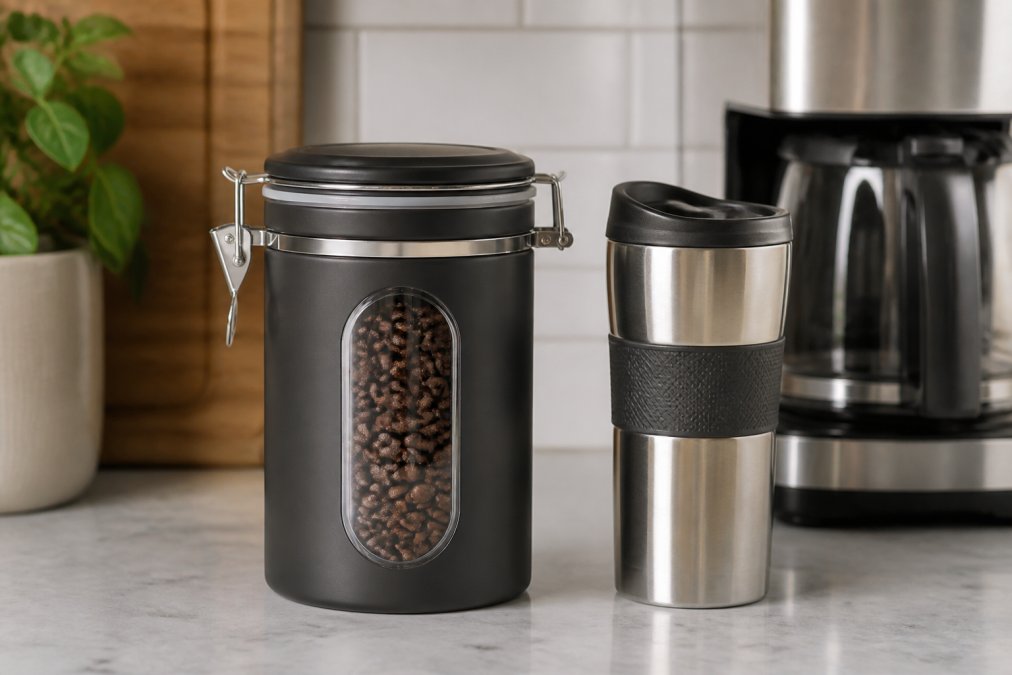
The best coffee storage canister is an airtight, opaque container that blocks oxygen and light. That combination does more for freshness than any other single upgrade.
Why Airtight and Opaque Matter
Airtight and opaque matter because oxygen and light are the two fastest destroyers of roasted coffee. A clear jar on a sunny shelf looks great and ruins beans quickly. Light exposure breaks down aromatic compounds, and an open lid lets oxygen in all day.
Look for these features:
- A tight seal that blocks air
- Opaque walls that block light
- A one-way valve if the beans are still degassing
- A size that matches how much you drink
Freezing Coffee Beans Pros and Cons
Freezing coffee beans is one of the most debated topics in coffee storage. Done correctly, it can extend freshness for months without sacrificing flavor. Done poorly, it introduces moisture, freezer burn, and off-flavors that ruin a premium roast. The key is understanding the science and following a precise protocol.
The Science of Freezing Coffee
When you freeze coffee beans, you slow down the chemical reactions that cause staling. Oxidation, which breaks down aromatic compounds, grinds to a near halt at temperatures below freezing. However, freezing also introduces risks. Moisture in the air can condense on cold beans, and if beans are not sealed properly, they can absorb odors from other frozen foods. The goal is to create a stable, moisture-free environment that preserves the bean's internal structure.
Pros of Freezing
- Extended shelf life: Properly frozen beans can maintain peak flavor for 3 to 6 months, and sometimes up to a year for very fresh, high-quality beans.
- Preserves aroma: The cold environment protects volatile oils that give coffee its complex scent.
- Ideal for bulk buys: If you purchase large quantities or subscribe to a roaster, freezing allows you to enjoy beans over time without staleness.
- Portion control: Freezing in single-use portions means you only thaw what you need, reducing waste.
Cons of Freezing
- Condensation risk: Every time you remove beans from the freezer, moisture can form on the surface. Repeated thawing and refreezing accelerates staling.
- Odor absorption: Coffee beans are porous and will absorb smells from nearby foods like fish, onions, or garlic.
- Freezer burn: Improper sealing leads to dehydration and oxidation, resulting in flat, cardboard-like flavors.
- Texture changes: Some enthusiasts note that freezing can make beans more brittle, leading to more fines when grinding.
How to Freeze Coffee Beans the Right Way
Follow this step-by-step method to freeze beans without compromising quality:
- Start with fresh beans: Freeze beans within a few days of the roast date, ideally before they peak. Beans that are already stale will not improve in the freezer.
- Portion into single-use servings: Divide beans into amounts you will use within a week. A common approach is to use small, vacuum-sealed bags or mason jars.
- Use airtight, moisture-proof containers: Vacuum-sealed bags are ideal because they remove oxygen and prevent moisture. If using jars, fill them to the top to minimize air space and seal tightly.
- Label and date: Write the roast date and freezing date on each portion so you can track freshness.
- Freeze quickly: Place portions in the coldest part of the freezer, not the door, where temperature fluctuates.
- Thaw properly: When ready to use, transfer a portion to the refrigerator overnight or let it sit sealed at room temperature for a few hours. Do not open the container until it reaches room temperature to prevent condensation.
- Never refreeze: Once thawed, use the beans within a week. Refreezing causes moisture damage and flavor loss.
When Freezing Makes Sense
Freezing is not for everyone. It is best for:
- Coffee enthusiasts who buy in bulk or want to save seasonal blends.
- Those who drink coffee slowly and cannot finish a bag within a month.
- People who want to preserve a particularly rare or expensive roast.
By following these guidelines, you can enjoy fresh-tasting coffee months after the roast date, without the common pitfalls that give freezing a bad reputation.
Stainless Steel Water Bottle, Standard →
Step-by-Step: How to Store Gourmet Coffee Beans for Peak Flavor
Follow these steps to store gourmet coffee beans so every cup tastes the way the roaster intended.
- Buy whole bean coffee with a clear roast date.
- Keep beans in the original bag, or move them to an airtight, opaque canister.
- Seal the container fully after every use.
- Store in a cool, dark spot away from the stove, oven, and window.
- Keep beans away from strong-smelling foods.
- Grind only what you need, right before brewing.
- For long storage, freeze in small vacuum-sealed portions.
- Track the roast date and finish beans within a few weeks.
Storage for Different Roast Levels
Different roast levels age at different speeds. Dark roasts carry more surface oil, and that oil migrates and oxidizes faster. Lighter roasts are denser and often hold up longer.
Match your storage to the roast:
- Light roasts: airtight canister, pantry, 3 to 4 weeks
- Medium roasts: airtight canister, pantry, 2 to 3 weeks
- Dark roasts: airtight canister or freezer, 1 to 2 weeks
Common Coffee Storage Myths and Troubleshooting Stale Beans
Even careful coffee lovers fall for storage myths that quietly ruin their beans. More importantly, when beans do go stale, most guides tell you to toss them. But there are ways to rescue or repurpose beans that have lost their peak, and understanding environmental factors like humidity and altitude can help you prevent staleness in the first place.
Debunking Persistent Coffee Storage Myths
Myth 1: The fridge keeps coffee fresh. The refrigerator is damp and filled with food odors. Coffee beans are porous and absorb moisture and smells, leading to stale, off-flavored coffee. The cold also causes condensation when beans are removed, accelerating degradation. Skip the fridge entirely.
How to Tell If Beans Are Stale
Stale beans lose their vibrancy. Look for these signs:
- Smell: A flat, papery, or cardboard-like aroma instead of a rich, sweet scent.
- Taste: Dull, lifeless flavor with no acidity or complexity.
- Bloom: When hot water hits grounds, fresh beans swell and bubble (bloom). Stale beans barely react.
- Extraction: Weak, thin body and fast flow through an espresso machine.
Rescuing and Repurposing Stale Beans
Don't throw away stale beans just yet. While they won't shine as a pour-over, they can still serve a purpose:
- Cold brew: The cold extraction method masks staleness and highlights smoother, chocolatey notes. Use a coarser grind and steep for 12-24 hours.
- Baking: Grind stale beans and use them in brownies, cookies, or rubs for meat. The coffee flavor still comes through.
- Coffee liqueur: Steep crushed beans in vodka or rum for a homemade extract.
- Compost: If all else fails, beans are organic and can be composted.
- Odor absorber: Place dry, used grounds in a bowl in the fridge to absorb smells.
Environmental Factors: Humidity and Altitude
By understanding these myths, recognizing staleness, and adapting to your environment, you can make the most of every bag of gourmet coffee.
Frequently Asked Questions
What is the best way to store coffee beans for long-term use?
For long-term storage, keep whole beans in an airtight, opaque container in a cool, dark place away from heat and moisture. If you plan to store them for more than a month, freezing in vacuum-sealed portions works well. Always let frozen beans thaw completely before grinding to prevent moisture from damaging the beans. This method helps preserve the aromatic compounds and oils that give gourmet coffee its bold flavor.
Is it okay to store coffee beans in a Ziploc bag?
A standard Ziploc bag is not ideal because it does not block oxygen or light effectively. Oxygen causes oxidation, which degrades flavor, and light exposure speeds up staling. If you must use a bag, choose a vacuum-sealed, opaque option and squeeze out as much air as possible. For best results, transfer beans to an airtight canister with a one-way valve that lets carbon dioxide escape without letting oxygen in.
Should you store coffee beans in the freezer or pantry?
It depends on how quickly you will use them. For daily brewing within two weeks, pantry storage in an airtight, opaque canister is best. For longer storage, freezing in single-use portions prevents freezer burn and keeps beans fresh for months. The key is to avoid repeated thawing and refreezing, which introduces moisture and ruins the bean integrity. Choose the method that matches your consumption speed.
How does light and moisture affect gourmet coffee quality?
Light breaks down the oils and aromatic compounds in coffee beans, leading to a flat, stale taste. Moisture causes beans to absorb water, which accelerates degradation and can promote mold. Store beans in an opaque, moisture-proof container away from windows, stoves, or sinks. This simple step preserves the cup profile and ensures your gourmet beans taste as bold as the day you bought them.
Great coffee deserves better than a cracked lid and a sunny shelf. If you want beans worth storing well, BO'S COFFEE LLC offers carefully curated blends like Cowboy Blend and Colombia, plus single-serve K-Cup capsules for busy mornings. Pair them with an airtight canister and a double-wall travel mug to protect every cup. Get started with BO'S COFFEE LLC and keep your daily grind bold from the first pour to the last.